
When many teeth are failing or already missing, replacing them one at a time may not always be the most practical treatment approach. Some patients want greater stability than a traditional removable denture can provide, yet they may assume that fixed teeth would require an individual dental implant for every missing tooth. Full-arch implant treatment offers another possibility.
Dedicated Smiles provides All-on-X dental implants in Woodbridge, VA for selected patients who need comprehensive tooth replacement. Instead of placing an implant for every tooth, the All-on-X concept uses strategically positioned dental implants to support a full arch of replacement teeth. The result is a treatment approach designed to restore function, stability, and a complete smile.
What Are All-on-X Dental Implants?
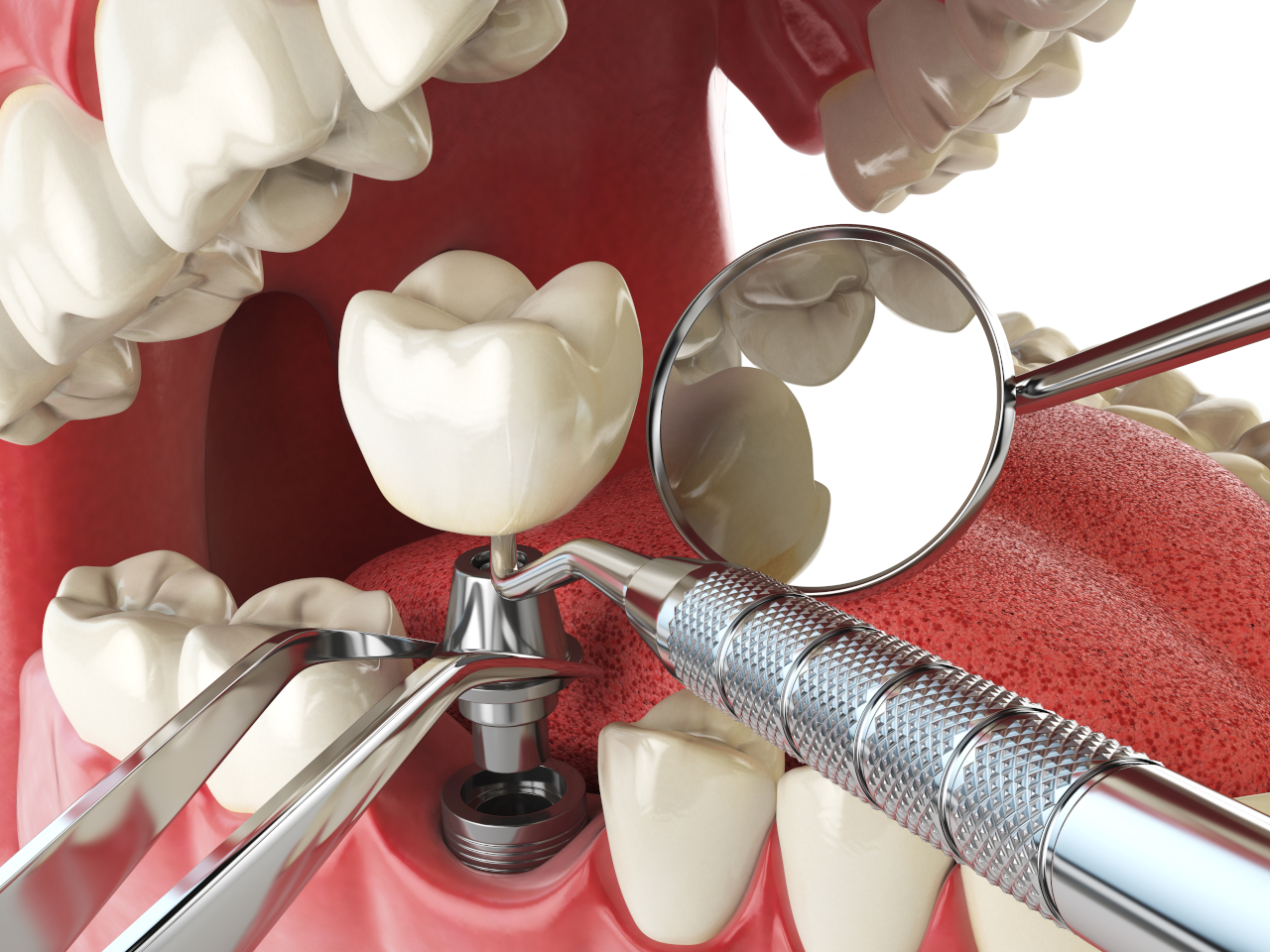
All-on-X describes a full-arch dental implant treatment in which multiple dental implants support an entire set of replacement teeth. The “X” reflects the fact that the exact number of implants can vary depending on the patient’s anatomy and treatment plan.
This differs from a single-tooth implant, where one implant generally supports one individual replacement tooth. Instead, the implants in an All-on-X treatment work together as a foundation for a connected full-arch restoration.
Because every patient’s jawbone, bite, remaining teeth, and oral health are different, All-on-X treatment requires detailed planning. Therefore, the exact position and number of implants should be selected based on the individual rather than following a single template for every patient.
Who Might Consider Full-Arch Tooth Replacement?
All-on-X dental implants may be considered when many or all teeth in one arch are missing, severely damaged, or no longer predictably restorable.
Some patients have gradually lost teeth to decay, advanced gum disease, trauma, or a combination of dental problems. Others still have several teeth, but those teeth may have extensive damage and a poor long-term prognosis.
In addition, people who already wear complete dentures may explore implant-supported treatment because they want increased stability.
However, having several missing teeth does not automatically mean All-on-X is the best solution. Whenever healthy natural teeth can be predictably preserved, their value should be considered carefully. A comprehensive examination helps determine whether full-arch treatment is appropriate or whether individual restorative options make more sense.
How Is All-on-X Different From Traditional Dentures?
Traditional complete dentures are removable appliances that rest on the gums and underlying tissues. They can replace a full arch of missing teeth without requiring implant surgery and remain an appropriate solution for many patients.
All-on-X restorations, in comparison, receive support from dental implants placed in the jaw. This implant foundation can provide increased stability during chewing and speaking.
Therefore, patients who struggle with movement or insecurity associated with removable dentures may be interested in learning whether an implant-supported option fits their needs.
However, All-on-X treatment also involves surgical procedures, healing, ongoing maintenance, and a different financial commitment. Consequently, the choice should be based on a complete discussion of benefits, limitations, oral health, and long-term care requirements.
Benefits of All-on-X Dental Implants
For appropriately selected patients, All-on-X dental implants can provide several advantages:
- Full-arch tooth replacement: One coordinated treatment can replace an entire upper or lower arch of teeth.
- Implant-supported stability: Dental implants provide a stable foundation for the replacement teeth.
- Improved chewing function: A stable full-arch restoration can make it easier to eat a wider variety of foods compared with an unstable removable appliance.
- Natural-looking design: The restoration can be customized to create tooth proportions and contours appropriate for the patient’s face and smile.
- Fewer implants than one per tooth: Multiple replacement teeth can be supported by a strategic number of implants rather than requiring an implant for every missing tooth.
- Support from the jawbone: Dental implants transfer functional forces into the bone where they are placed.
- Greater security: Implant-supported teeth are designed to remain stable rather than shifting like a poorly fitting removable denture can.
- Coordinated treatment planning: The entire arch can be planned as one restorative system rather than as a series of unrelated individual teeth.
How Many Implants Are Used With All-on-X?
The number can vary. That is the reason for the “X” in the name. The dentist determines how many implants may be appropriate based on bone volume, anatomy, bite forces, restorative design, and other clinical factors.
More is not automatically better, and fewer is not automatically preferable. Instead, the implants need to be positioned so that the final restoration has suitable support.
Advanced imaging can help the dental team evaluate available bone and important anatomical structures. Therefore, the implant plan is developed around the patient’s actual anatomy rather than selecting implant positions only from the visible appearance of the gums.
Do All-on-X Patients Need Bone Grafting?
Not every patient requires bone grafting. One advantage of comprehensive implant planning is that the dentist can evaluate where adequate bone is available and determine whether grafting is necessary.
However, some patients have experienced significant bone loss after years of missing teeth, advanced periodontal disease, infection, or previous extractions. In those cases, bone grafting may become part of the treatment plan.
Dedicated Smiles also provides bone grafting when additional support is needed for implant treatment. Nevertheless, only an examination and appropriate imaging can determine whether grafting is necessary for an individual patient.
What Happens During an All-on-X Consultation?
The consultation is one of the most important parts of treatment because full-arch rehabilitation involves more than simply choosing replacement teeth.
Your dentist first evaluates the remaining teeth, gums, jawbone, bite, and overall oral condition. Dental imaging helps provide information about bone anatomy and potential implant locations.
You will also have an opportunity to discuss what is currently difficult for you. For example, some patients struggle to chew certain foods, while others are frustrated by loose dentures or repeated dental problems affecting many teeth.
In addition, the treatment team considers the size, position, and appearance of the future teeth. Restorative planning matters because implants need to be positioned with the final teeth in mind.
What Happens During the All-on-X Procedure?
The exact sequence varies depending on the condition of the mouth. If failing teeth remain, some may need to be removed as part of the treatment process.
Dental implants are then placed in planned positions within the jawbone. Depending on stability and other factors, a temporary set of teeth may sometimes be attached during the initial treatment phase.
However, “same-day teeth” should not be confused with the end of treatment. Even when a temporary restoration can be provided quickly, the implants and surrounding bone still need time to heal.
During this phase, patients generally follow specific dietary and cleaning instructions to protect the implants and temporary restoration.
After appropriate healing, the treatment progresses toward the final full-arch restoration. The final teeth are designed for long-term function, bite, comfort, and appearance.
Can You Get New Teeth the Same Day?
Some All-on-X treatment plans allow a temporary full-arch restoration to be attached soon after implant placement. This can allow selected patients to leave with fixed temporary teeth rather than remaining without teeth during healing.
However, eligibility depends on implant stability, bone quality, anatomy, and other clinical factors. Therefore, same-day temporary teeth cannot be guaranteed for every patient before evaluation.
Furthermore, the temporary restoration is not necessarily the same as the final restoration. It helps the patient function and maintain appearance during healing while the implants integrate with the surrounding bone.
What Is Recovery Like After All-on-X Treatment?
Full-arch implant treatment is a surgical procedure, so swelling, tenderness, and temporary dietary modifications can be expected during the early recovery period.
Your dental team will provide detailed instructions regarding oral hygiene, medications, food choices, and activity. Following those directions is important because the implants need protection while healing begins.
A softer diet is commonly recommended during early healing. Although temporary teeth may feel stable, the implants underneath are still integrating with the jawbone. Consequently, biting hard foods too soon can place unnecessary stress on the healing foundation.
Follow-up visits also allow the dental team to evaluate healing, clean areas that are difficult to reach, and make adjustments when necessary.
How Do You Clean All-on-X Dental Implants?
Implant-supported teeth still require daily cleaning. While an implant cannot develop a cavity like a natural tooth, plaque and bacteria can collect around the implant and surrounding gum tissue.
Therefore, home care must include cleaning around and beneath the full-arch restoration according to your dental team’s recommendations. Specialized floss, interdental brushes, water flossers, or other tools may be recommended depending on the design of the restoration.
Professional maintenance is equally important. Your dental team can examine the implants, surrounding tissues, bite, and restoration during follow-up visits.
In other words, implant treatment replaces teeth, but it does not eliminate the need for preventive dental care.
Can All-on-X Dental Implants Last a Long Time?
Dental implants are intended as a long-term tooth replacement solution. However, longevity depends on several factors, including oral hygiene, gum health, smoking or tobacco exposure, general health, bite forces, and consistent professional maintenance.
The prosthetic teeth and other restorative components may also experience wear over time. Therefore, repairs or replacement of certain components can eventually be necessary even when the implants themselves remain stable.
Patients who grind or clench heavily may place additional forces on the restoration. Your dentist can evaluate whether protective measures are appropriate after treatment.
All-on-X Versus Individual Dental Implants
If only one or two teeth are missing, individual implants may be more appropriate. However, when an entire arch requires replacement, placing one implant for every missing tooth is generally unnecessary.
All-on-X uses a planned group of implants to support the connected arch. This can make full-mouth rehabilitation more efficient while still providing an implant-supported foundation.
However, preserving healthy natural teeth remains an important consideration. Full-arch treatment should not be selected simply because it appears faster or more comprehensive. The condition and prognosis of every remaining tooth must be evaluated carefully.
All-on-X Versus Implant Overdentures
Implant overdentures and All-on-X treatment both use dental implants, but the restorations can function differently.
An overdenture is generally removable by the patient and gains additional stability from implants. Meanwhile, an All-on-X restoration is designed as a fixed implant-supported arch that is not routinely removed by the patient for daily cleaning.
Each option has advantages. Removable implant overdentures can be easier for some patients to clean and may involve different treatment requirements. Fixed full-arch restorations can provide the feel of teeth that remain securely in place.
Therefore, discussing both options may help patients understand which balance of stability, maintenance, treatment complexity, and cost best fits their priorities.
Who May Not Be an Immediate Candidate?
Some patients need additional treatment before implants can be placed. Active gum disease, uncontrolled dental infection, inadequate bone, or certain health considerations may need to be addressed first.
Tobacco use can also affect healing and implant outcomes. Therefore, patients should discuss smoking, vaping, medications, medical conditions, and previous surgeries openly during consultation.
Being told that additional preparation is necessary does not always mean implant treatment is impossible. Instead, the goal is to create healthier conditions before beginning a complex restorative procedure.
Questions to Ask Before Choosing Full-Arch Implant Treatment
Patients considering All-on-X dental implants should understand the complete treatment journey. Useful questions include:
- Are any of my current teeth healthy enough to preserve?
- How many implants are recommended for my arch?
- Will I require bone grafting?
- Will I receive temporary teeth during healing?
- What foods should I avoid during recovery?
- How will I clean underneath the restoration?
- How frequently will I need professional maintenance?
- What restorative components may require replacement over time?
- What alternatives should I consider?
A clear treatment plan should help you understand not only the procedure itself but also the responsibilities involved in maintaining the restoration afterward.
Explore a Stable Full-Arch Tooth Replacement Option
Living with many missing or severely damaged teeth can affect eating, speaking, comfort, and everyday dental function. For selected patients, All-on-X dental implants provide a way to replace an entire arch using strategically positioned implants that support a coordinated set of replacement teeth.
If you are considering All-on-X dental implants in Woodbridge, VA, Dedicated Smiles is located at 2970 Prince William Pkwy, Woodbridge, VA 22192. Call Us Today at (703) 583-7720 to book an appointment and learn whether full-arch implant treatment may be appropriate for you.